NBA Commissioner Adam Silver unveils the “smart jersey,” which can digitally transform with the push of a button

By Julian Mendoza

The NBA’s main attraction this weekend might be the high-flying slam dunks and dazzling plays of the 2019 All-Star festivities, but one spectacular feature requires viewers to focus not on the hoop in front of their favorite player, but on what’s on their back.

Image via NBA.

On February 15th, the Friday that held the first of the All-Star Weekend festivities, NBA commissioner Adam Silver addressed an audience at the NBA All-Star Technology Summit to introduce a variety of the league’s futuristic plans, including ideas like hologram mascots and facial recognition for admitting fans into a game. What stole the show, though, was Silver’s demonstration of name and number-changing “smart jerseys.” The technology, controlled by a smartphone app, allows users to digitally alter the name and number that appears on the back of their NBA jersey so that they can customize which player they want to represent for any particular occasion. As an example of what this looks like, Silver used his phone to change a Stephen Curry all-star jersey on display to a Michael Jordan all-star jersey.

This is far from the first time the NBA has embraced cutting-edge technology as something that could benefit the league and the game of basketball. In 2018, the Sacramento Kings became the first franchise to allow fans to view games using virtual reality equipment. More recently, Nike-sponsored athletes took to the court in January 2019 in the Adapt BB, the first basketball shoe that automatically tightens to fit the wearer’s foot.

There is no known release date for the “smart jersey” or any of the other technology mentioned, but Silver stated that his goal is to have the technology he demonstrated at the summit available by 2038 for fans to enjoy.

The 2019 NBA All-Star game begins Sunday, February 19th at 8:00pm EST on TNT.

More reading:

https://www.theverge.com/2019/2/16/18226777/nba-smart-jersey-future-basketball-wearable-tech
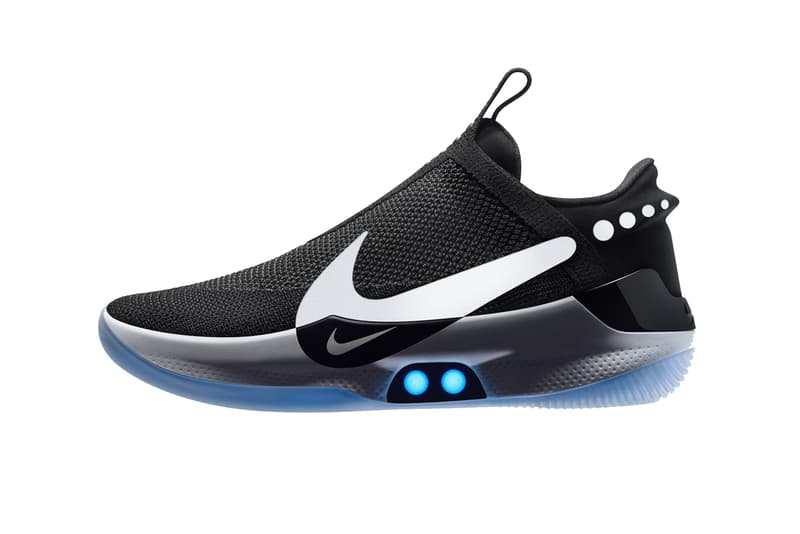
The Nike Adapt BB and the Questionable Future of Auto-Lacing Sneakers

By Julian Mendoza

Last month, NBA stars like Jayson Tatum, Luka Doncic, and Kyle Kuzma took us “Back to the Future” with some fancy footwear straight out of a science fiction movie: laceless basketball sneakers with technology to tighten themselves. Dubbed the “Adapt BB” by Nike, the new innovation looks to challenge the norm for how we wear our kicks. The only question people have is: why? Is there something wrong with how we’ve been tying our shoes all these years? Is the Adapt BB a valuable innovation we can learn from in the world of technology? Or is this just another gimmick that will come and go with the times?

Image result for nike adapt bb

The Nike Adapt BB. Image via Nike.

The intrigue behind auto-lacing sneakers began with 1989 sci-fi blockbuster Back to the Future: Part II in which Michael J. Fox’s character, Marty McFly, was outfitted with a pair of Nike Air Mags, a high-top and high-tech shoe that zipped shut with straps that tightened with the push of a button. Fast-forward to 2016, Nike tapped into people’s nostalgia by releasing the Air Mag in limited quantities to the general public for the first time, with resale prices frequenting tens of thousands of dollars. Nike further experimented with the technology by implementing it in a more lowkey sneaker, the HyperAdapt 1.0. Retailing at a hefty $720 and lacking the nostalgic appeal of the Air Mag, some failed to see the novelty of a self-tying shoe worth the investment.

Commercial success aside, there is no questioning that the emergence of such technology in the sneaker world shows potential in the world of engineering. With organizations like the NBA and NCAA always looking to embrace cutting-edge technology, we can expect the benefits and potential of auto-lacing to be explored.

Right off the bat, the most glaring benefit of auto-lacing shoes is that it takes away the difficulty of tying shoelaces while keeping the wearer’s foot locked in. Nike’s FlyEase technology that debuted in 2015 to make lacing up sneakers easier for those with disabilities already confronted this issue, however. All of which came at a cheaper price point and with a simpler design.

So does this technology have a practical application in the future of sneakers? The answer to this question could very well come from a college campus. Colleges are constantly looking to take advantage of the newest tech for use in classrooms and on campus, so it wouldn’t come as a surprise to see college faculty and students experiment with high-tech sneakers for their school’s varsity athletic programs.

Have an idea? Leave a comment and share your thoughts.

The Nike Adapt BB releases February 17th at Nike stores, online, and through Nike’s SNKRS app.

Sources and more on the topic:

https://www.complex.com/sneakers/2019/02/auto-lacing-sneakers-are-not-the-future

https://news.nike.com/news/the-flyease-journey

https://www.theverge.com/2019/1/15/18167388/nike-self-lacing-shoes-adapt-bb-smart-bluetooth-app-features-battery-life-price-release-date

Multimedia Platforms are the Future of Journalism

By Julian Mendoza

In an age ruled by social media and pocket-sized devices, accessibility and speed are two of the most important aspects of surfing the web for people in 2019. Music can now be downloaded and streamed on the fly via streaming services such as Apple Music and Spotify. Movies and TV can be accessed similarly through services like Netflix, Hulu, and Amazon Prime. Complex video games are becoming more widely available on our phones, especially with the rapid development of virtual reality. Now, journalists and broadcast media companies are beginning to take note and ride the wave, using an array of social media platforms to carry out quicker reporting than ever before.

Through platforms like Twitter and Instagram, news consumers are taking in news differently. With scrolling-based interfaces that feature posts with brief captions, people are only reaching for important tidbits of information that catch their eye and give them the scoop in seconds. With 90% of United States citizens getting their news from their phones according to a study conducted by the Knight Foundation, news media companies must take advantage by adapting to this new method of info consumption.

One way that journalists must take on the learning curve is to master densifying their writing, fitting as much information into a compact segment as they can to accommodate the shortened attention spans of today’s news consumers. This may include modifying the structure and concept of a headline as we know it. News writers must become acclimated to writing for Instagram photo captions or to fit Twitter’s 280-character limit.

Another way the multimedia age is changing the game is by encouraging journalists to utilize video to tell the story for them. On the most direct level, video is becoming more prominent in the news due to virtually every citizen being equipped with video capabilities due to their phone cameras. This makes for a much higher chance for video of a breaking news event to be captured. Secondly, Instagram’s increased presence in the broadcast media world means a higher demand for visuals, with written captions taking a back seat. Twitter is a welcoming platform for the utilization of photos and video as well, as including one doesn’t count against the character limit.

With the introduction of technology like virtual reality, the possibilities for the growth of modern journalism seem endless. A journalist in 2019 must be capable of evolving their craft just as quickly as the platforms they embrace.

Featured

Welcome!

Hello everybody! Welcome to The Amherst Outlet, an extension of TrueMass, your online media source for Amherst news. I’m Julian Mendoza, an English and Journalism double-major at UMass Amherst, one-third of TrueMass and the sole reporter behind this blog. Although I’m happy you’re here, this introduction is, hopefully, the last chance you have to get a glimpse of me. My hope is that this blog will help you get to know the world in its truest form. With that, I aim to adhere to proper journalistic practice and make sure my personal opinions do not infiltrate my work.

In terms of content, my main focus is going to be putting out stories centered around our technologically-blossoming lives in 2019 America. With Amherst being a college town rife with innovation and development on its campuses, there is no better display of how technology influences life in the modern era. At The Amherst Outlet, I will be keeping you informed on the latest, biggest, and brightest technological developments in the world, while also highlighting the relevance to life here in Amherst and at college. This doesn’t just mean the latest word on iPhones or virtual reality headsets. Expect to be brought outside of the box and see how changing technology affects facets of life such as sports, fashion, and education. Keeping up with this blog will open your eyes to just how many things human innovation and achievement can impact.

In addition to reporting technology buzz and occasionally off-roading with news articles covering miscellaneous topics, The Amherst Outlet website will showcase relevant outside information through imbedded social media posts and blogrolls that include third-party news publishings. While we will always supply fact-based, anti-bias coverage ourselves, we at The Amherst Outlet support the journalistic ethics of establishing a balanced knowledge base through utilizing a wide array of different sources.

Thank you for coming to The Amherst Outlet. Stay woke!

—Julian